


It's All About The Beverages
Beverage Centers Are A Must Have in Today's Kitchens

The best home building and remodeling ideas do more than make a home look beautiful. They improve the way people move through their day. That is one reason beverage centers have become such a popular feature in kitchens and entertainment areas.
A thoughtfully designed beverage station gives coffee, cocktails, sparkling water, wine, juice, and everyday drinks a dedicated home - while keeping the main kitchen more organized and easier to use.
We're seeing homeowners think beyond the traditional wet bar. Today's beverage centers are highly personalized. One family may want a quiet morning coffee station with an espresso machine and mug storage. Another may envision a fully equipped cocktail bar for entertaining. In a busy household, the same space may hold cold drinks and snacks for children, bottled water for guests, and wine or beer for adults.
Why Beverage Centers Are Becoming So Popular

Recent industry research confirms what we are seeing. Houzz reports that nearly one-quarter of homeowners renovating a kitchen include a beverage station, while searches for coffee bars, beverage bars, wet bars, and dedicated whiskey bars have continued to rise.
The National Kitchen & Bath Association also identifies dedicated beverage stations, personalized storage, multifunctional spaces, and layered lighting as important directions in current kitchen design.
The appeal is easy to understand: a beverage center creates a convenient destination for one of the most frequent activities in the home. It can reduce traffic around the refrigerator, prevent small appliances from taking over the main countertops, and make entertaining feel more relaxed.
Coffee Bars That Simplify the Morning Routine

In kitchen remodels, coffee bars are among the most requested versions of the beverage center. A successful coffee station brings the entire routine together: the coffee or espresso machine, mugs, beans or pods, tea, sweeteners, syrups, spoons, and a nearby source of water.
A beverage refrigerator or refrigerated drawer can keep milk, creamers, cold brew, and sparkling water close at hand.
The best coffee bars are designed around how the homeowner actually uses the space. Pull-out shelves can make heavy appliances easier to access.
Appliance garages or pocket doors can conceal equipment when it is not in use. Open shelving or glass-front cabinetry can display favorite mugs and glassware, while integrated lighting gives the area a warm, finished appearance.
Beverage Centers Designed for Entertaining

For homeowners who enjoy hosting, a beverage center can become a natural gathering point. Depending on the available space, it may include a sink, wine refrigerator, beverage cooler, ice maker, bottle storage, glassware drawers, and a countertop for mixing and serving drinks.
Locating the station just outside the main kitchen allows guests to help themselves without interfering with food preparation.
A dedicated entertaining area also creates an opportunity to introduce materials or colors that feel special. Dark cabinetry, warm wood, dramatic stone, mirrored backsplashes, metal accents, and illuminated shelving can give a compact bar area a sense of personality without overwhelming the rest of the home.
Basement Beverage Stations for the Whole Family
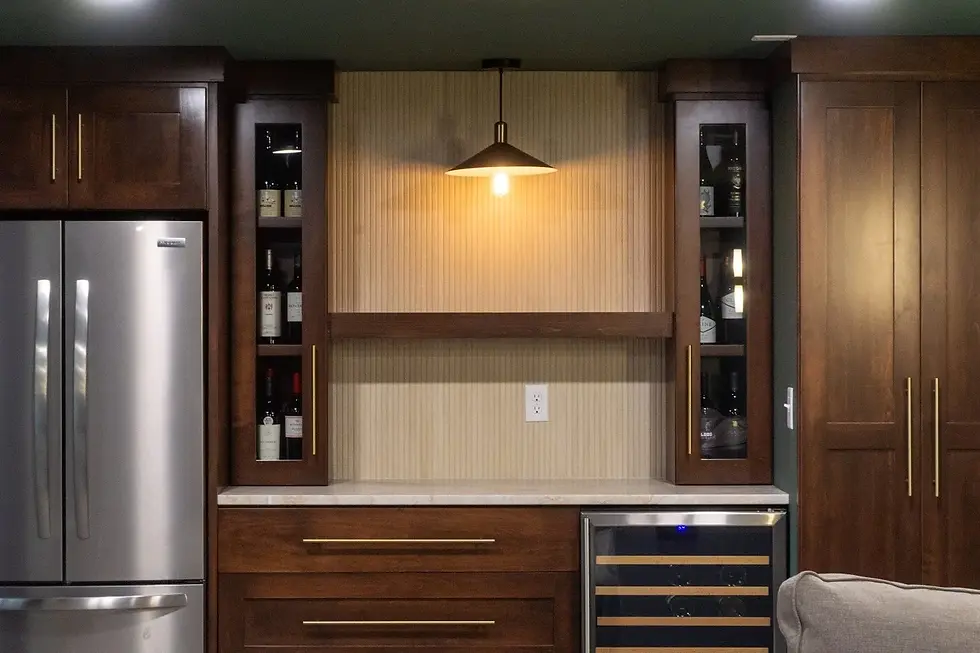
Finished basements and recreation rooms are ideal locations for beverage centers because they often serve several purposes at once. A well-planned station can support movie nights, game days, overnight guests, children's activities, and adult entertaining. Refrigerated storage reduces trips upstairs, and closed cabinetry keeps snacks, serving pieces, and supplies organized.
The key is to design the space for everyone who will use it. Lower drawers can hold kid-friendly drinks and snacks. Upper cabinetry can store glassware and adult beverages. A sink may be worthwhile when the basement is far from the kitchen, while a dry bar may be a simpler and more economical choice when plumbing is not necessary.
Design Details That Make a Beverage Center Work
Refrigeration sized for the household
Choose among beverage refrigerators, wine columns, refrigerated drawers, or combination units based on what you actually drink and store.
Storage with a purpose
Plan designated areas for mugs, glassware, bottles, coffee supplies, cocktail tools, snacks, and recycling.
Convenient electrical access
Provide appropriately placed outlets for coffee makers, blenders, charging, and other equipment without creating visible cord clutter.
Layered lighting
Combine task lighting at the counter with accent lighting inside or beneath cabinetry to make the area functional and inviting.
A durable work surface
Select a countertop and backsplash that can handle moisture, spills, citrus, coffee, and everyday cleanup.
A design connection to the room
The beverage center can complement the surrounding cabinetry or become a distinctive focal point through a contrasting finish or special material.
A Small Space Can Make a Big Difference

A beverage center does not require a large footprint. It can be incorporated into an unused wall, a former desk area, a pantry, a hallway niche, the end of a cabinet run, or a basement alcove. What matters most is thoughtful planning: understanding who will use it, what will be stored there, and how it should connect to the surrounding rooms.
When those details are considered early in the remodeling process, a beverage center can feel like an intentional part of the home rather than an afterthought.
It becomes a feature that supports daily routines, makes entertaining easier, and adds a polished layer of function and personality.
Considering a kitchen, basement, or entertainment-area for your new home build or remodel? Summit Construction can help you design a beverage center that fits the way your family lives, gathers, and entertains.


Comments